By Kevin Rowe, Head of Digital Development, DDaT Luton
See all posts related to our digital platform.
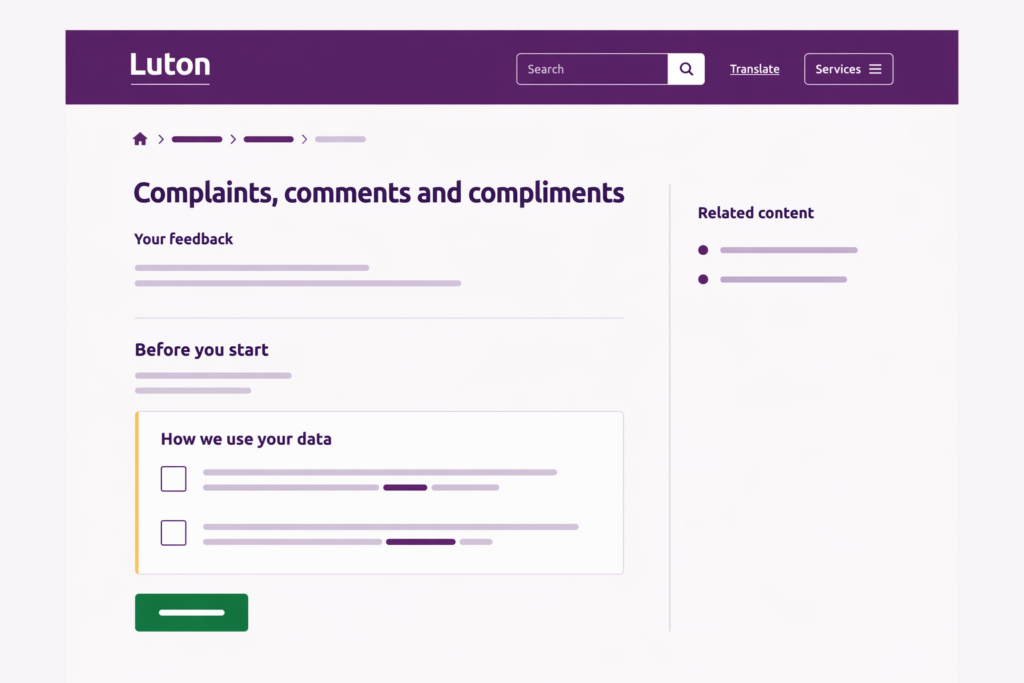
Stylised illustration of a Luton Council digital service page showing a form with headings, content sections and a consent checkbox panel.
Sprint 3 has been a bit different for me personally. I spent the first half in Santorini and the second half catching up on all the great work that has been happening back in Luton.
It has been a good reminder that progress does not stop when you step away. A lot of the progress this sprint is down to the efforts of colleagues including:
Joining up the experience
One of the biggest pieces of work this week has been styling our external pages.
We had already done the work on internal screens, but this is the part residents actually see. It is where the experience either feels joined up or it does not.
We’ve now aligned the look and feel of our forms with the main council website.
That might sound simple, but it’s important.
Residents do not think in terms of different systems. They just expect a consistent journey from information to action.
This work brings us much closer to that. Moving from the website into a form now feels like part of the same service, not something separate.
Our blueprint
Alongside that, we have made our blueprint available for wider testing. It shows everything we have built so far on the resident-facing side.
This is not a live service. It is a working example based on the patterns, components and styles we will reuse across services. We will duplicate the blueprint and use it as an accelerator for future builds.
We are keen to get feedback at this stage. What works well? What does not? What feels clear, and where does it fall short? That feedback will help us refine the platform before services go live. Please get in touch if you want to be part of this.
Understanding how it’s used
We have implemented Google Analytics on the platform so we can start to understand how people use it.
This will help us identify where users struggle, where they drop out, and what needs improving.
At the same time, we are putting the right controls in place for people who do not want to be tracked. This is about trust and compliance, and we are building it in from the outset rather than adding it later.
We’ve also created a form to begin building a resident panel, so user research is part of the process early on, this is an iteration of our feedback form, which we can surface at any point of a user journey.
Starting with complaints
Alongside the foundations work, we’ve started discovery on our first service: complaints, comments and compliments.
This sits within our corporate host. Rather than building each service in isolation, we are grouping related services together in clusters that share similar functionality.
For the corporate host, that means focusing on case-based services where:
- journeys cut across multiple teams, are organisation-wide and support core statutory duties
- cases need clear ownership, escalations and SLAs
- multiple people can collaborate on them where required
Complaints is the first service in that group, but it will not be the last.
Future services in the same host will include:
- FOI
- subject access requests
- data breaches
- member or MP enquiries
These all follow similar patterns, so building them this way helps us avoid duplication and deliver more consistently.
For complaints specifically, we’ve been:
- working closely with the emerging complaints squad
- picking up previous business analysis work
- understanding reporting requirements with the Resident Experience team
This will help us design the service to collect the right data from the start.
Additional progress this sprint
Alongside the main areas, we have also made progress on the underpinning work needed to support live services. That includes:
- configuring outbound emails to go through our SMTP service, so notifications and updates are secure, reliable and consistent
- progressing governance to enable platform documents to be stored in SharePoint, so information is managed in line with corporate standards
What this means
We now have:
- a plan for a consistent experience across our website and forms
- a working blueprint that people can see and interact with
- analytics in place to help us learn and improve
- a clear approach to building reusable service clusters
- discovery underway for our first live service
There is still more to do, but we are now at the point where the platform is visible, testable and open to feedback. That feels like a real milestone.

Like

Love

Haha