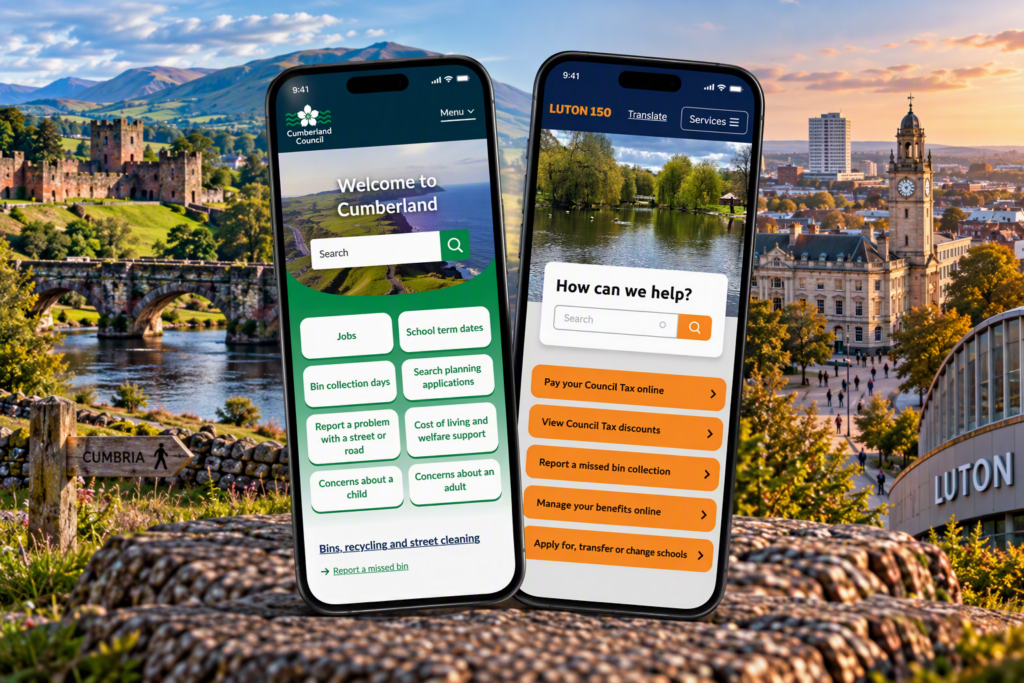
For Cumberland Council and Luton Council, that spirit of collaboration is not an occasional activity; it is part of the culture of both authorities, built into the way we work as a core principle and actively supported by our leadership teams. That is why we are pleased to have started a new collaborative relationship between our digital teams.
At first glance, these councils could not be more different.
Cumberland is a large rural authority covering a vast geographical area across North Cumbria. With a population of around 280,000 and a median age of 46, many of our challenges are shaped by distance, dispersed communities, connectivity, and ensuring services remain accessible across towns, villages and remote rural locations.
Luton, meanwhile, is a densely populated urban authority in Bedfordshire with around 240,000 residents and a median age of 33. It is super diverse, lots of different cultures, religions, ethnicities, and faces challenges associated with population density, deprivation, housing demand and a fast-growing younger population.
Yet despite these differences, we have discovered that many of the digital challenges facing our organisations are remarkably similar.
Different places.
Craig Barker (Cumberland Council)
Different demographics.
Different landscapes.
But…
Same ethos.
Same drive.
Same ambitions.
Jayvik Patel (Luton Council)
Sharing, not reinventing
The relationship began through informal conversations between our digital teams, exploring areas where we could learn from each other’s experience and avoid duplicating effort.
Rather than approaching technology in isolation, both councils have recognised the value of treating successful developments as reusable building blocks. If one authority has already solved a problem, developed a process, created a template or configured a platform in a way that works, there is often no need for another council to start from scratch.
Our discussions have focused on a number of areas where both organisations are actively investing and innovating.
Liberty Create
Both councils are making use of Liberty Create as part of their approach to digital service delivery and process modernisation. Conversations have centred on:
- how the platform is being used
- lessons learned from implementation
- governance approaches
- opportunities to accelerate delivery by sharing tangible products rather than rediscovering solutions independently
Project and portfolio management
Another area of shared interest has been project and portfolio management development using a low-code development platform.
Both councils have been exploring how digital teams can:
- better manage demand
- prioritise work
- track delivery
- provide transparency around investment and outcomes
A valuable tool for SMT/directors looking for that high level snapshot view of what is happening across the council.
By comparing approaches, tools and processes, we have been able to challenge our own thinking and identify opportunities to strengthen governance while maintaining agility. As local authorities continue to manage increasingly complex transformation portfolios, sharing practical experience in this space has proved particularly valuable.
LocalGov Drupal
We’ve also spent time discussing LocalGov Drupal, the open-source platform that powers Luton’s website and both Cumberland Council’s website and intranet.
LocalGov Drupal represents one of the best examples of what local government can achieve through collaboration. Rather than each council separately procuring and developing similar website functionality, councils contribute improvements back into a shared platform that benefits the wider sector.
The discussions between Cumberland and Luton have explored both the practical implementation of LocalGov Drupal and the wider opportunities presented by open collaboration. Topics have included:
- content management operating models
- intranet development, governance
- accessibility
- user experience
- opportunities to contribute improvements back into the community
For both councils, this approach aligns strongly with our beliefs in working in the open and supporting nationally shared digital products wherever practical.
Why these conversations matter
It’s easy to assume that councils need to be similar to collaborate effectively.
Our experience so far suggests the opposite.
Some of the most valuable learning comes from organisations operating in very different environments. Questions that one council takes for granted can challenge long-held assumptions in another. Different resident needs drive different approaches, creating opportunities for fresh thinking and innovation.
For Cumberland, there is considerable value in understanding how an urban authority like Luton approaches digital delivery. Equally, our experiences of delivering services across a geographically dispersed rural area offer perspectives that may be useful elsewhere.
The common thread is that both organisations are committed to improving services, making better use of technology and ensuring public money delivers maximum value.
Building a collaborative future
These conversations are only the beginning.
The opportunity for local government to collaborate more effectively on digital services has never been greater. Whether through shared platforms, reusable components, governance models, service patterns or lessons learned, there is significant potential to reduce duplication and accelerate delivery across the sector.
As councils continue to face financial pressures, growing demand and rising expectations from residents, collaboration is no longer simply a nice thing to do. It is becoming an essential part of modern digital delivery.
We’re looking forward to continuing the conversations with colleagues in Luton, sharing what we’ve learned, learning from their experience, and exploring where future opportunities for collaboration may emerge.
Collaboration is a key part of our cultures and is embedded in everything we do. It is a core principle that shapes how our teams; work, make decisions supported by our leadership team, and deliver positive resident outcomes.
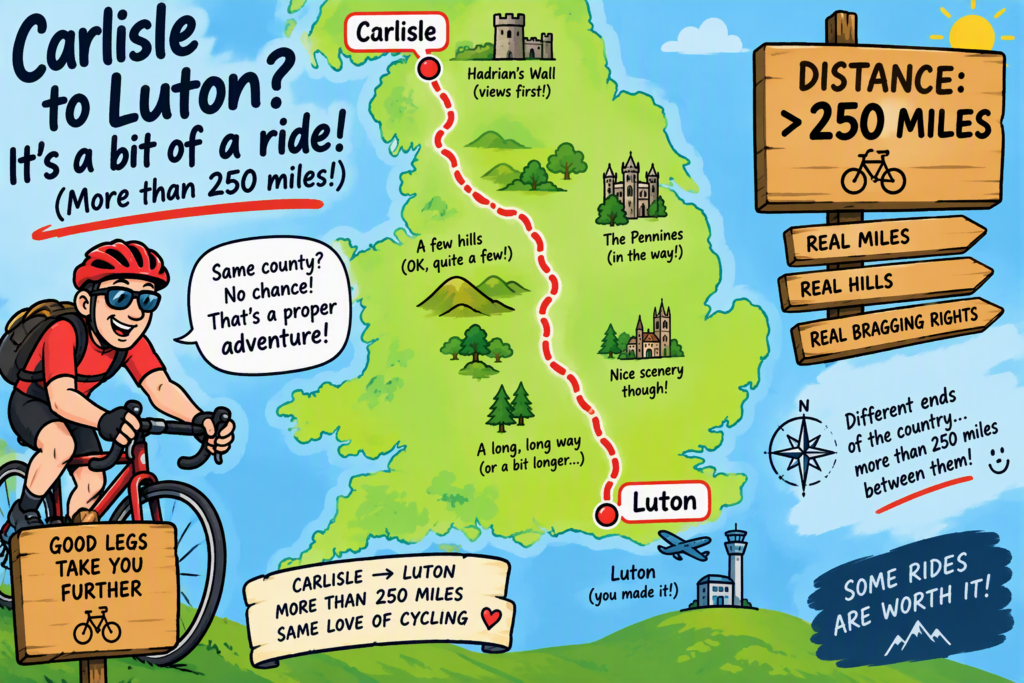
After all, the distance between Carlisle and Luton may be more than 250 miles, but when it comes to digital innovation, we’re finding there’s far more that connects us than separates us.
There’s much more to come
If you want to follow the work as it develops, both teams are sharing more in the open through the Cumberland Council Digital and ICT Blog and Digital Luton blog.
We’ll also be publishing more detailed case studies as the collaboration develops, showing what we have learned, what we have reused and where shared digital practice is making a practical difference.
This post was co-authored by DDaT colleagues from Cumberland Council and Luton Council.

Like

Love

Haha